- Shiny Thing$
- Posts
- 💸 The 1st Bet that Breaks You


So you won your first bet???
Congrats, thats the worst thing that could have ever happened to you…
Rob Petrozzo, for Rally
Last month I tweeted (X’d?) something that got a bunch of people who consider themselves professional gamblers very angry…
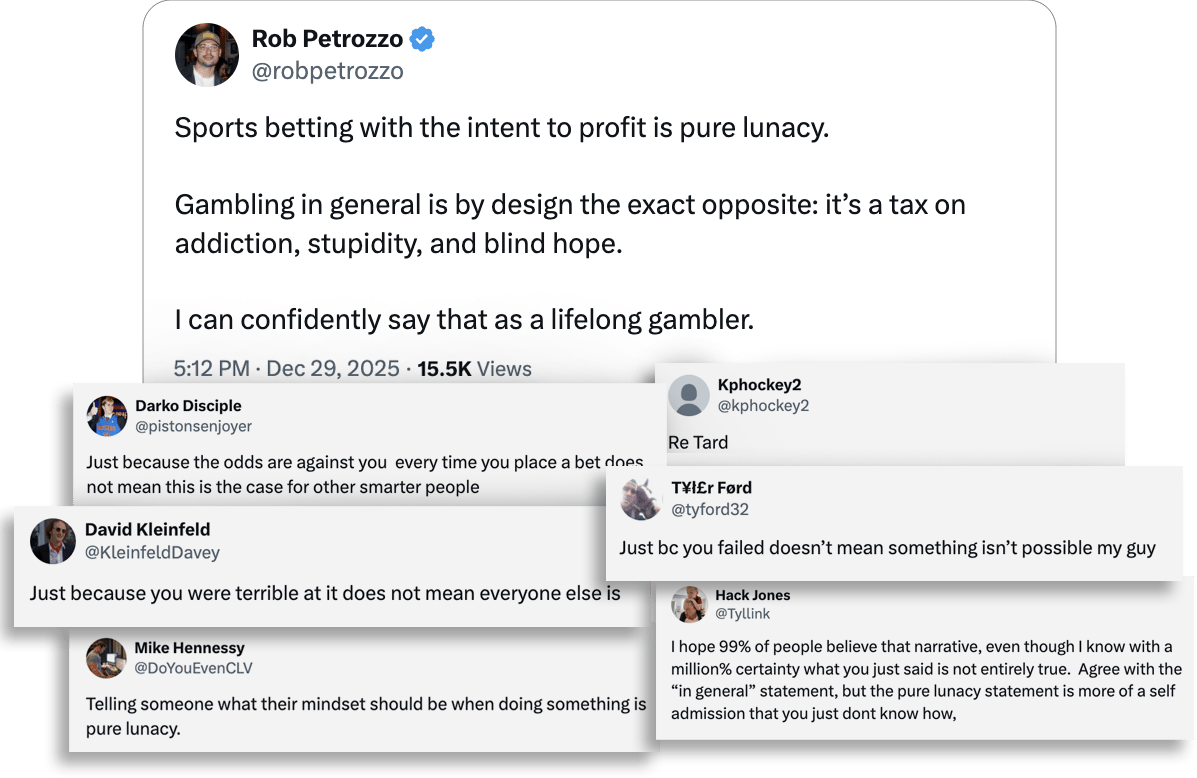
Once replies started coming in, I started drafting long responses to each one in my notes app, but then realized this was not something that was going to matter to the person on the other side of the tweet. Because you can’t tell someone who is winning in the near term that they’re a loser in the longer term… no matter how much data supports it. That’s because their brain is now wired differently, and it happens to every investor, gambler, and risk-taker at some point in their journey to the elusive “big win.”
Whether you believe you’re a pro with an edge against the house (keep lying to yourself…it’s fine), or someone who put $10 into an office pool and walked away with a $200 Amazon gift card, one truth about money and risk has remained unchanged for a thousand years: the most dangerous moment in gambling isn’t the loss. It’s the win.
More specifically: the first win.
The early one, which is conveniently the one that always hits easily. The one that teaches your brain the wrong lesson before you’ve learned any of the rules and makes you believe you’re special.
It’s the $20 blackjack hand that turns into $200 on your first night in Vegas. But its more often in the present financialization-of-everything landscape the call option or 2X leverage ETF you bought that spiked instantly, or the first time you ask ChatGPT to predict an outcome - and it actually works. You don’t walk away thinking “I got lucky” as you should. You walk away thinking “I get it.” And once that idea takes root, it’s impossible to kill.
So, considering you can now bet on anything all the time and because we’re a week away from the Super Bowl (the biggest gambling day of the year), this week’s writeup is dedicated to the way our brain’s work when we win too early, and why it’s often the beginning of an absolute nightmare for your emotions and your bank account
Before getting into the data, a quick personal story to frame everything…
In my early 20s, I was in Vegas for a friend’s bachelor party. By the end of the weekend, we were all down a couple thousand dollars, but numb to the value of money in the way that only a few days of nonstop gambling can make you. The trip ends, and its time to ship off to Harry Reid International Airport for a 10am flight and get the f*ck out of this place…
On the way out of the Hard Rock hotel (don’t judge, it was the big party hotel at the time) bags in hand, checking out, we sat down at the last blackjack table near the exit. It was calling me… I watched them change the dealer and bring in a happy fresh face. Brand new shoe getting shuffled. I had no choice.
I walked up and took the center seat. My friends were at the other seats, but it was just me vs. the dealer one on one. I put up my first $100 bet to start the shoe. It was a nice easy dealer 6 that turned into a bust. I played $100 a hand for the first 15 hands and won every single one.
Then I upped it to $200.
Then $250.
Then, toward the end of the shoe, $500 a hand.
I won something like 45 out of 50 hands - the first time I'd ever witnessed anything like that happen. I probably tipped $1500 during that shoe and still walked away up around $15K. We cashed the chips. I signed a tax form at the window for the first time in my life in a casino, and then instead of celebrating, my friends immediately started telling me how much more I should have won.
“You should have pressed, you could’ve made $200K.”
That was, at the time, the first BIG casino win I’d ever had. But there was no joy. No relief. No sense of victory. Fifteen years later, that story still gets told, and in my own head and the heads of all of my friends, that morning registers as a loss.
That’s the sickness. When you do it long enough, wins stop mattering unless they’re life-changing. Everything else fades into numbness.
And at the end of the day, whether its gambling or investing, the emotion attached to it is actually all just science.
The Brain Loves Easy Wins (For All the Wrong Reasons)
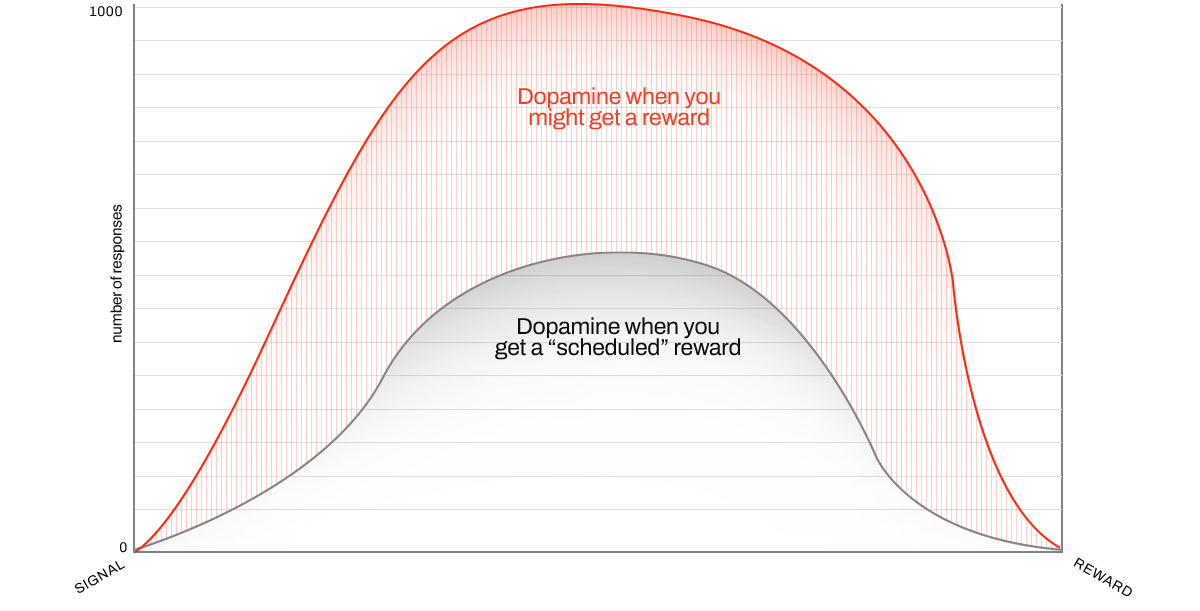
Psychologists have studied this for decades. Early success activates the same dopamine pathways as addictive substances, but with a particularly ugly twist. Dopamine isn’t the “pleasure chemical,” it’s actually the anticipation chemical. It’s the same neural reward system that makes announcing your goals (saying “I’m thinking about starting that new business” for example) trick your brain into feeling a premature sense of accomplishment, and then reducing the motivation needed to actually complete the task. With money, what reinforces behavior isn’t winning - it’s the belief that you’re about to win again.
Intermittent reinforcement (random rewards delivered unpredictably) has been shown to create stronger behavioral conditioning than consistent rewards. It’s why slot machines work. And for the same reason, albeit a much more benign version, it’s why push notifications are far and away the most effective method we have at Rally to re-engaging a user.
It’s also why “almost winning” feels worse than losing outright. No one recites the play-by-play of a bet that you that you had no chance of winning as soon as it started. But I talk about the 2015 Super Bowl final play where the Seahawks had 2nd & Goal from the 1 yard line and the best running back in the league and Russel Wilson chose to throw a bullet pass directly over the middle that got picked off to end the game and flush my money down the toilet with it as if it happened yesterday. Yes, it makes for great “misery loves company” group chat texts, but it erodes the brain’s ability to separate the true importance of winning moments over time and creates callouses to protect you from feeling loss (probably the most dangerous part).
Long story short, when you win early, your brain starts building a story: “This isn’t random. I’m good at this.” - and that story is so DANGEROUSLY sticky. Because now it feels earned, and it survives a shocking amount of contradictory evidence.
But thanks to this insane dystopian world in which we now live, it’s worse than ever…
…Because Everything Is Gambling Now
One of the quiet shifts of the last decade is that almost everything has been gamified and therefore, gambled. The ability to bet on literally anything in any territory of the United States through prediction markets (and now within all of the biggest sportsbook apps and the same brokerage accounts that house your retirement account) has opened floodgates that to me, as a lifelong gambler, were unthinkable just 24 months ago.
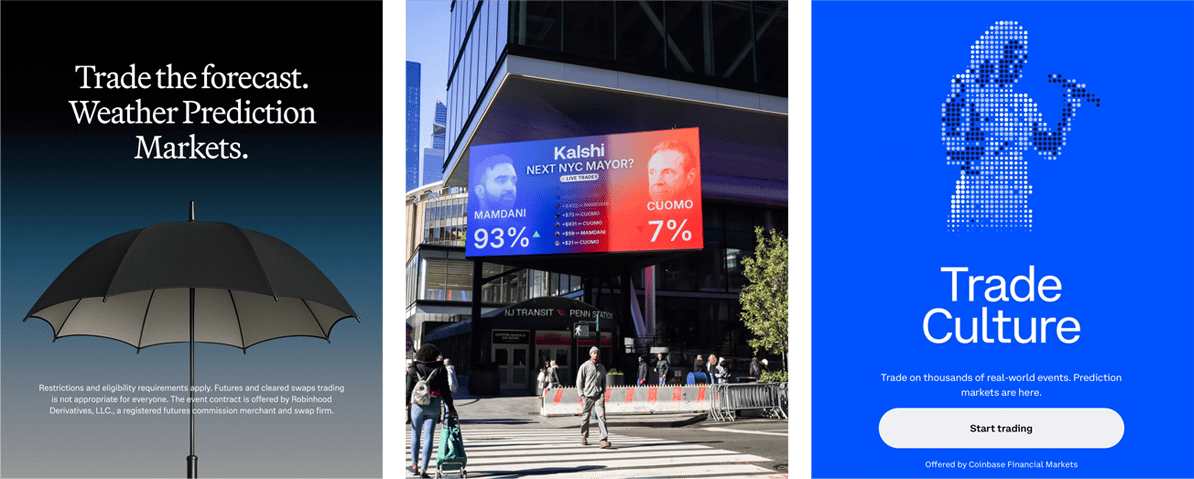
I’ll be the first to admit I didn’t see it coming. But in retrospect, this was all obvious. Sports betting is obvious. Options trading is obvious. Crypto, NFTs, memecoins, all obvious.
But it goes further. Career choices feel like bets. Posting content feels like betting on virality and having enough friends that care to hit 100 likes. Dating apps basically make you bet on getting a response and reward intermittent validation. Even AI tools can give you the illusion of predictive power without accountability.
We’ve turned uncertainty into a product and confidence into a feature. And the “normal adult” - not a reckless, stupid, irresponsible child - is now constantly exposed to small, low-friction wagers that feel skill-based.
Which makes early wins even more dangerous.
And for me, it took a long time to unlock myself from the allure and the chase of that first “big” win in Vegas and the intermittent wins that came over the course of two decades. It wasn’t until I recently turned 40 that I even recognized it…
But here’s the part that matters, and it relates to the tweet that triggered this newsletter: gambling, over time, is a guaranteed losing proposition. The math is brutal. Casinos and sportsbooks don’t need you to lose today, they just need you to keep playing. And yet, even when people know the odds, they continue.
Why?
Because losses feel temporary and correctable, while wins feel like proof of identity. Behavioral economists call this Illusion Of Control - the belief that skill influences outcomes that are largely random. Add in sunk cost fallacy that prevents cutting losses, social reinforcement form every direction, and everyone’s naturally selective memory, and you have a perfect machine for persistent bad decisions.
Early wins supercharge all of it.
Investing isn’t “clean” by any means, but It’s certainly different. This is where investing and gambling diverge.
Gambling is largely binary… you win or you lose.
The clock is short and the feedback is immediate. The house associated with most sports gambling always has an edge through a baked in commission structure.
Investing isn’t easy or guaranteed, but it’s typically not binary. Ownership, time, and compounding matters.
Even as compounding has gotten harder with inflation and higher valuations and faster cycles and way more noise, owning “assets” still tilts the odds in your favor over long horizons. Stocks, businesses, real assets, cash-flowing things. They don’t promise excitement and they don’t reward you instantly, but they also don’t usually light up your dopamine receptors on day one.
That’s exactly why they work, and thats why they keep you out of a lot of self inflicted danger if you can shift your horizon just a bit longer… its WAY harder to win your first bet when you’re buying assets. But the win over time is often very sweet.
Because once your brain learns that money, success, or certainty can come easily, it will spend years chasing that feeling again. The same amount of time you could have been fully invested in something that’s waiting for you on the side of the calendar with real returns.
The real skill in all of this isn’t predicting outcomes. It’s surviving uncertainty without needing constant validation. And the quiet, boring discipline of ownership will always beat the rush of being right (eventually).
Even if it never feels as good in the moment.
Good Luck to anyone in any markets….
Until Next Week…