- Shiny Thing$
- Posts
- 🎁 Christmas is a Liquidity Event

Piles and Piles of Gifts.
(Rob Petrozzo, for Rally)
When it comes to any market, new or old, the most talked about aspect is always the liquidity.
It’s the goal of every financial platform, and at Rally thats no different (which is why we’re launching the 2026 with a brand new product bringing near-instant liquidity to our upcoming asset slate - more to come on that top of the year 🤫)…
But outside of the standard year round markets, every December, we get hit with a new one disguised as “generosity.” It’s called Christmas.
For context, the holidays are ALWAYS about Family and Tradition and Togetherness, and theres definitely a huge element of generosity mixed in, but we also all know there is an aspect of consumerism that continues to dominate the twelfth month on the calendar. More each year than the year before.
It’s why Q4 matters most to almost every business.
Because underneath the lights and wrapping paper, Christmas is one of the most efficient liquidity events ever created.
For this brief, predictable window every year, billions of dollars are forced out of checking accounts and into objects. Not because they’re needed or because they’re “scarce,” but because the calendar says it’s time.
If you’re reading this newsletter on Sunday morning around 9am EST when we send it out, you can probably feel that last-week urgency and the soft panic that is in the final stretch of turning want into need.
Prices stop mattering as much. Comparison shopping gets sloppy. Emotion takes the wheel entirely in this home stretch - which is exactly how liquidity is supposed to work.
Money moves fastest when people stop thinking about it as money.
This week, in Shiny Thing$ edition number 215, we take a look at how “Christmas” has perfected that trick.

The Oldest Playbook in Modern Commerce
Every good liquidity event shares the same ingredients:
All you need is a fixed date, a sense of urgency, some social pressure, and an emotional justification.
It’s the same psychology that drives IPO weeks, auction finales, and the matcha lines all off Manhattan, except when it comes to the holidays its compressed into a cultural ritual we’ve normalized since childhood.
Christmas does it better than any holiday. There is no extension. You can’t circle-back to it like a December email come January.
And if you opt out, there are gonna be consequences. You either show up with something in your hands, or you feel it. And that pressure, which is definitely subtle but EXTREMELY powerful, is what turns hesitation into spending.
This is why December pricing behaves differently.
You see it in realtime in:
Toys that spike in value for two weeks and then disappear.
“Limited holiday editions” that aren’t limited at all.
Collectibles that sell aggressively in December and cool off by January.
Auctions that outperform estimates simply because buyers are emotionally primed.
Liquidity distorts price discovery during mania.
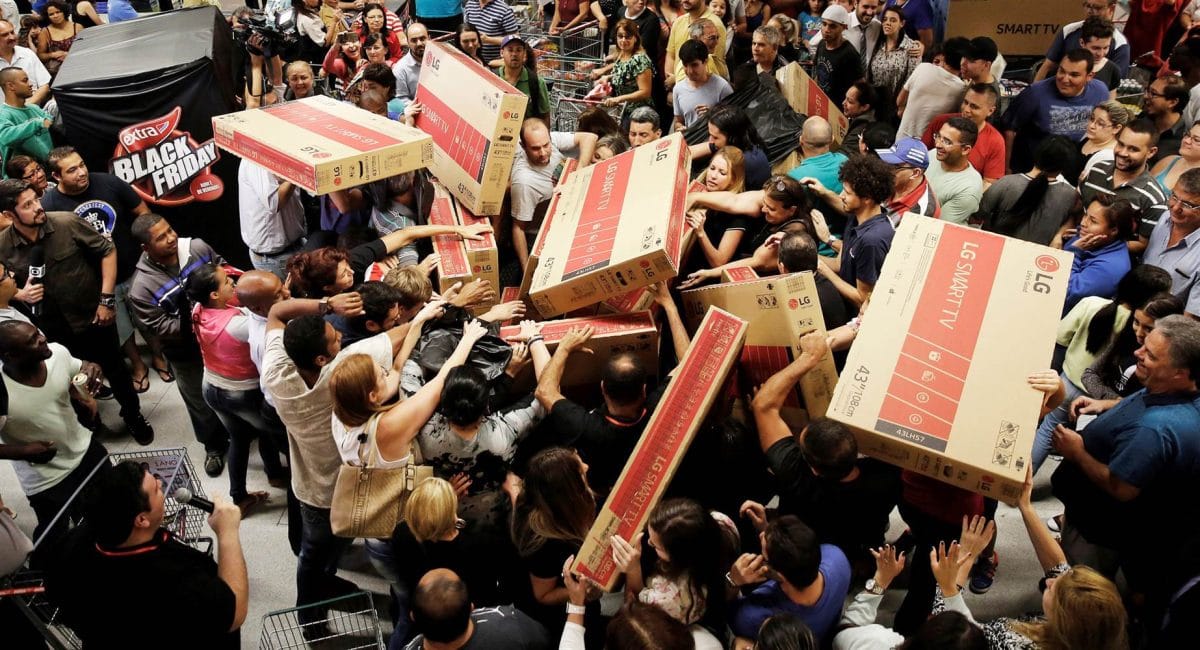
When money needs to move now, rational valuation takes a back seat. The buyer isn’t asking, Is this fairly priced? They’re asking, Will this arrive in time? or Will this feel special enough? Will I win the gift giving contest and make everyone love me. (I threw that last sentence in maybe from a personal perspective, but when it comes to gift-giving I feel like everyone wants to have given “the best gift” at least a little bit, no?)
It’s just reality. I’ve written about it before in this newsletter and we built an entire business around the concept that markets don’t operate in spreadsheets.
They operate in people. And people process value in transactions…
And Gifts Are Just Emotionally Wrapped Transactions
The weirdest part of all of this is that we learn this dynamic super early in childhood without even realizing it.
As kids, Christmas morning is often the most capital-dense moment of our lives. Hundreds and sometimes thousands of dollars materialize under a tree with no visible cost basis. The bike and the model car and barbie house appear fully formed, detached from labor, pricing, or tradeoffs.

We don’t see the money leave. We only see it arrive. And that separation is what matters in the way its wrapped (no pun intended).
It trains us to associate objects with emotion first, and cost second (if at all).
Which is why certain things stick with us. Thats why some items get kept, others tossed or forgotten, and a very small number quietly survive untouched (ex: the first gen iPod we sold on Rally for a world record price - a December gift that was never opened).
Those survivors - the sealed games, the unplayed Magic cards, the unopened toys - weren’t preserved because they were valuable. More often than not, they were preserved because they weren’t the right gift at the time and then were just kinda forgotten about, remaining hermetically sealed through decades sometimes.
Desire destroys preservation, and indifference or lack of immediate emotional connection can accidentally create an “asset.”
That’s why some of the most meaningful collectibles today were never positioned as special. They weren’t holiday centerpieces, and outside of the international franchise products (like Mario Bros. For example), they weren’t really marketed aggressively. They simply survived while everything else was used up, broken, traded away, or forgotten.
The Day After Tells the Truth
December 25th is to emotion, what December 26th is to reality.
It’s when the market quietly reopens… some early returns begin and the eBay listings appear. Trades happen. The emotional premium evaporates. What’s left is the object itself, which by now is detached from the moment that justified it.
This is where real value starts to show, which is no different than what happens after hype cycles in financial markets. Once urgency fades, only the things with substance hold attention. Everything else drifts back toward its baseline.
None of it is a flaw in the system though. It’s a mirror that shows us how easily money moves when emotion leads and how logical pricing folds like origami under the slightest bit of seasonal pressure.
And it reminds us that the things that last usually aren’t the loudest in the moment.
The opposite actually - they kinda quietly wait in wings and then outlive the event entirely.
Long after the wrapping paper is gone and the urgency fades. Long after the liquidity dries up.
Those are the things that will still matter, which in reality is the Family and Tradition and Togetherness I mentioned in the opening paragraph (and sometimes some really rare and valuable stuff decades later 😉)
Wishing everyone a warm holiday season - whether you’re celebrating Christmas, Hanukkah, or simply time with people you care about.
Until Next Week…